In recent years, the management of the organic fraction has become a central issue in European and Italian environmental policies. EU Directive 2018/851, implemented in Italy through Legislative Decree 116/2020, made separate collection of organic waste mandatory for all municipalities, while the 2024 ISPRA Urban Waste Report highlights that this fraction accounts for around 40% of total municipal waste.
A significant share that directly affects operating costs, recycling quality and the achievement of European targets.
In this context, tools capable of reducing moisture and improving waste quality become essential for both operators and citizens. This is where the aerated system – developed 22 years ago – proves to be an even more decisive ally today.
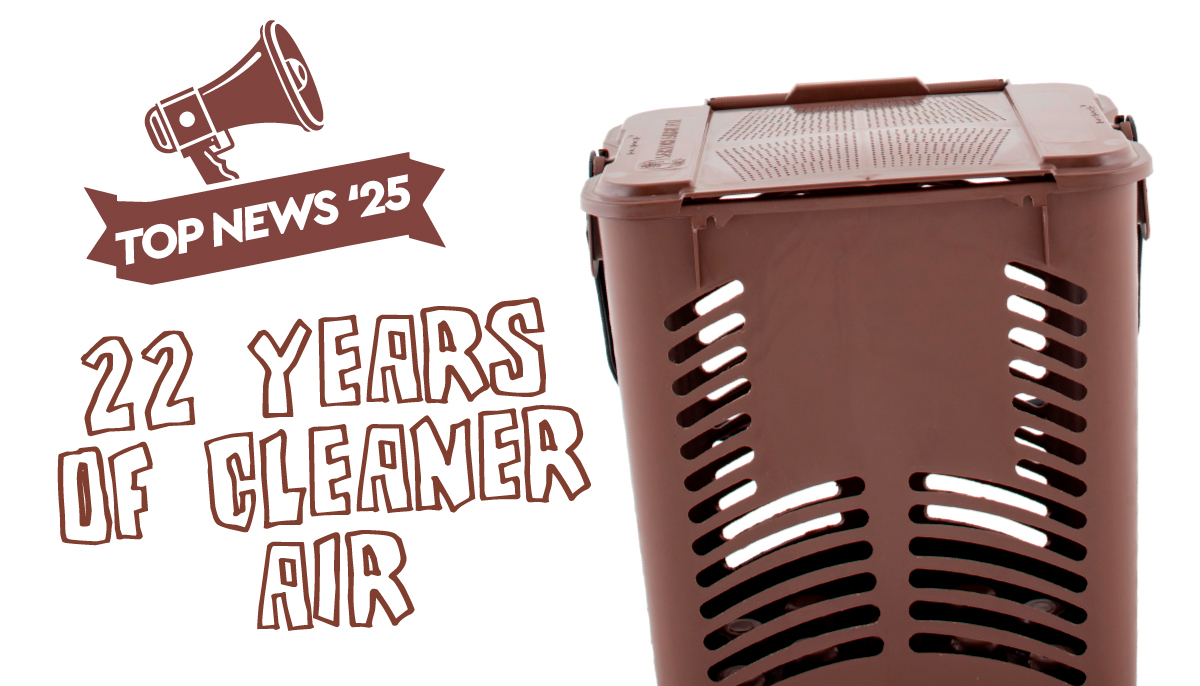
When Sartori Ambiente developed the first domestic aerated system in 2003, the focus was mainly on improving hygiene and reducing unpleasant odours in kitchens. For this reason, a system was designed consisting of:
- aerated Stelo container
- compostable bioplastic bag compliant with UNI EN 13432:2002.
Trials and tests carried out demonstrated very clear results:
- weight reduction between 12% and 22%
- odours and mould limited after one week
- perfectly intact bag.
Today we know that these effects improve not only everyday life, but also the entire organic waste treatment chain.
What Makes an Aerated System Effective?
The principle is simple: the right air, at the right time.
The Stelo container is made of Plastica Seconda Vita–certified recycled polypropylene and features a fully perforated structure. This allows for:
- evaporation of liquids
- reduction in leachate formation
- lower anaerobic microbial activity, responsible for unpleasant odours
- preservation of the strength of the compostable and biodegradable bag.
The result is a natural pre-drying process that turns organic waste into a more stable, lighter and easier-to-handle material.
After more than twenty years, the aerated system continues to be chosen by municipalities and operators because it effectively combines technical robustness, environmental sustainability, ease of use, cost reduction and high compatibility with constantly evolving regulations.
A solution developed before current directives, yet perfectly aligned with today’s needs for a more efficient, lighter and more sustainable organic waste management chain.